Step behind the camera, behind the microphone, and into the world of professional
media production.
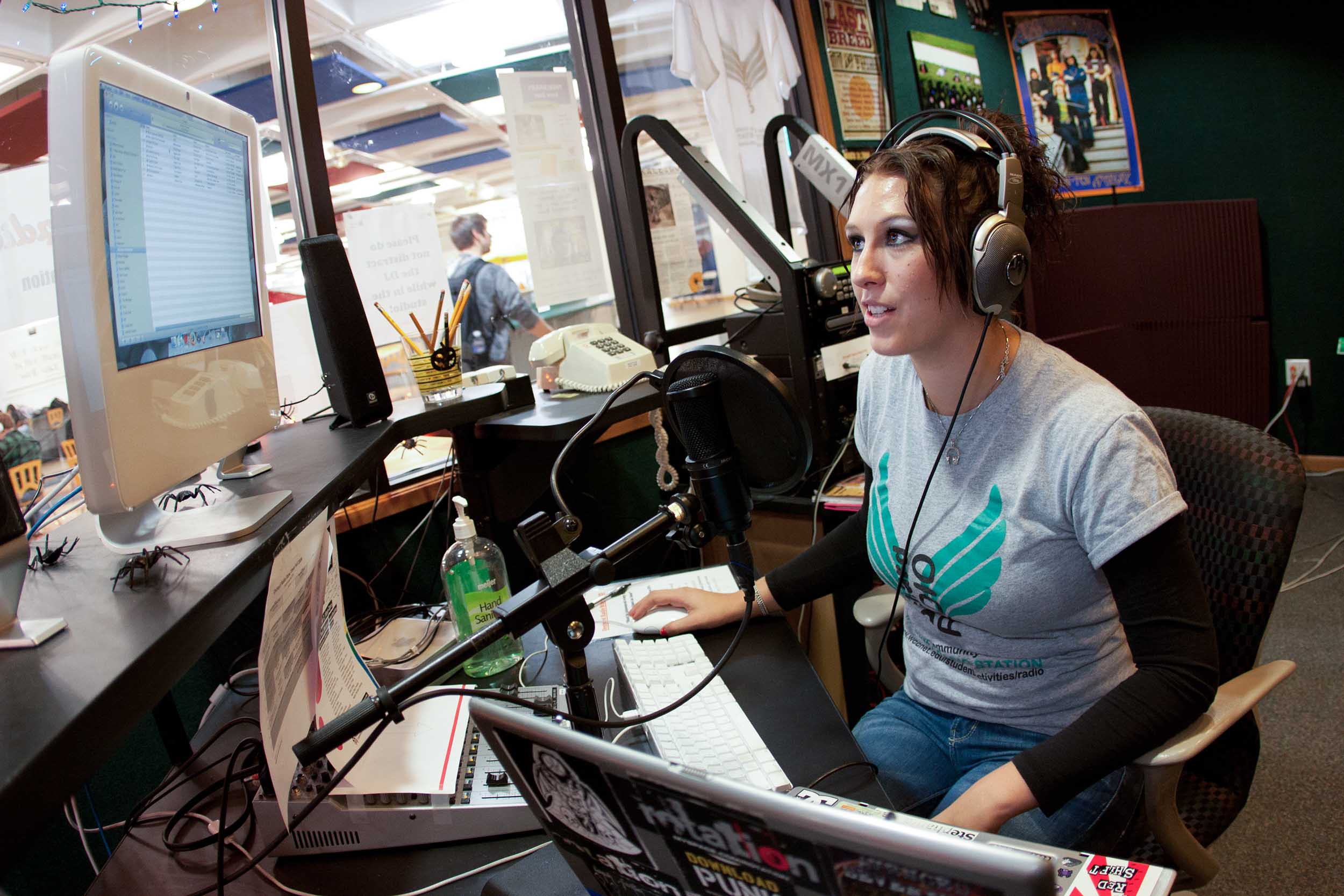
The Broadcast Media Arts program provides hands-on training in the realm of radio
and gives students experience in live production, script-writing, announcing and editing.
The program course offerings emphasize the communication and technical skills needed
for jobs in a variety of fields within the media industry, including;
- Advertising
- Public relations
- Broadcast journalism
- Project production
- Producing
This program prepares students to either enter directly into the workforce or transfer
to a four-year institution.
Articulation Agreements
- Eastern Michigan University; BA and BS degrees
Copies can be obtained from WCC's Articulation Agreements website.
Next Steps
Apply See Program & Courses in Catalog Request Information
Career Outlook in Michigan
| Career Title |
Median Salary |
Annual Openings |
| Camera Operators, Television, Video, and Film |
$49,308 |
70 |
| Audio and Video Technicians |
$56,751 |
186 |
| Broadcast Technicians |
$47,048 |
57 |
Data provided by Lightcast
What do Camera Operators, Television, Video, and Film do?
-
Compose and frame each shot, applying the technical aspects of light, lenses, film, filters, and camera settings to achieve the effects sought by directors.
-
Operate television or motion picture cameras to record scenes for television broadcasts, advertising, or motion pictures.
-
Adjust positions and controls of cameras, printers, and related equipment to change focus, exposure, and lighting.
What skills do Camera Operators, Television, Video, and Film have?
-
Active Listening:
Giving full attention to what other people are saying, taking time to understand the points being made, asking questions as appropriate, and not interrupting at inappropriate times.
-
Coordination:
Adjusting actions in relation to others' actions.
-
Reading Comprehension:
Understanding written sentences and paragraphs in work-related documents.