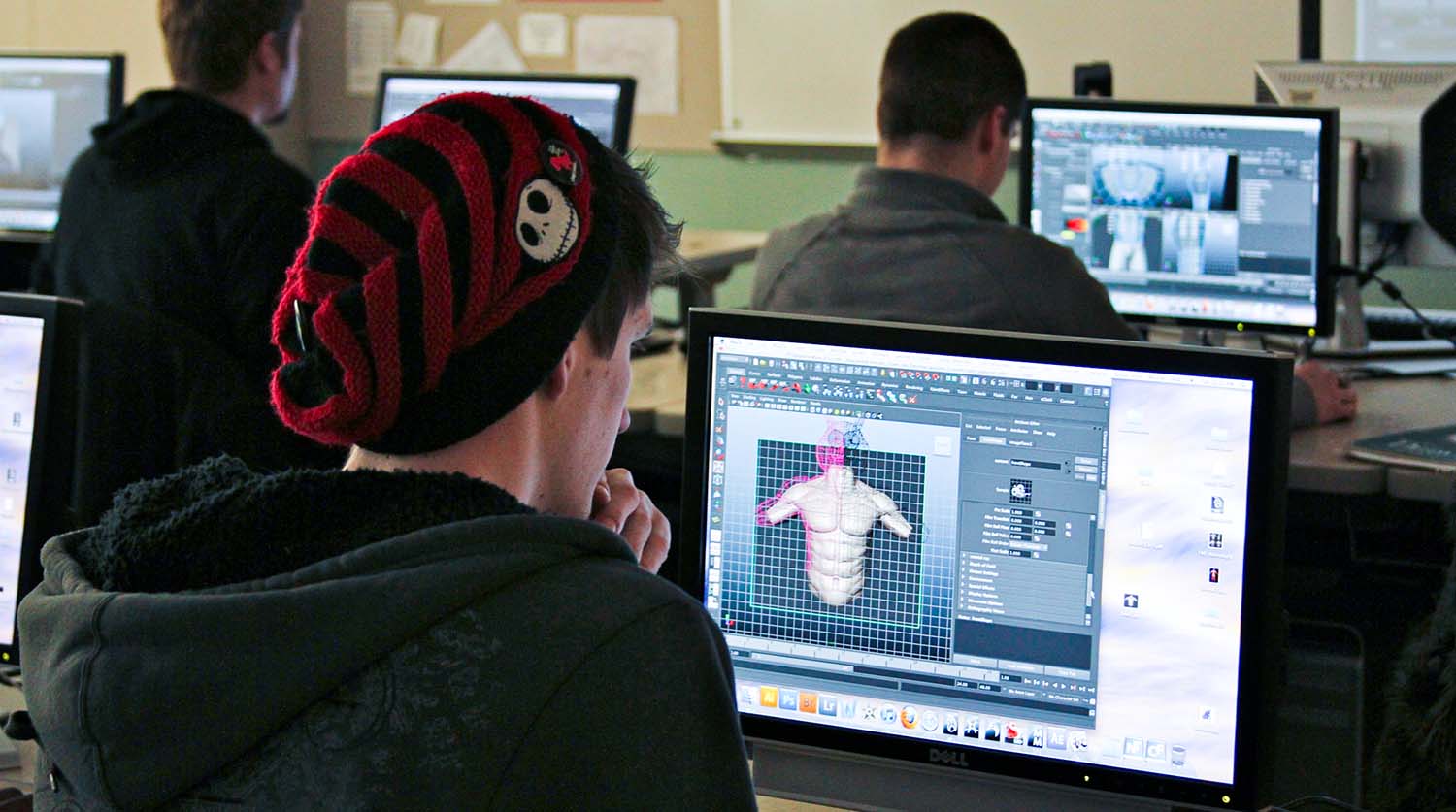
Bring your creative vision to life across multiple digital platforms.
This degree is designed for students who wish to earn an associate's degree by creating
a personalized program in the Digital Media Arts (DMA) to meet their individual needs.
Students will design a 60-credit, multi-disciplinary program in conjunction with an
academic advisor that will meet their personal educational needs for employment or
career advancement.
Next Steps
Apply See Program & Courses in Catalog Request Information
Career Outlook in Michigan
| Career Title |
Median Salary |
Annual Openings |
| Camera Operators, Television, Video, and Film |
$49,308 |
70 |
| Graphic Designers |
$54,482 |
694 |
| Audio and Video Technicians |
$56,751 |
186 |
Data provided by Lightcast
What do Camera Operators, Television, Video, and Film do?
-
Compose and frame each shot, applying the technical aspects of light, lenses, film, filters, and camera settings to achieve the effects sought by directors.
-
Operate television or motion picture cameras to record scenes for television broadcasts, advertising, or motion pictures.
-
Adjust positions and controls of cameras, printers, and related equipment to change focus, exposure, and lighting.
What skills do Camera Operators, Television, Video, and Film have?
-
Active Listening:
Giving full attention to what other people are saying, taking time to understand the points being made, asking questions as appropriate, and not interrupting at inappropriate times.
-
Coordination:
Adjusting actions in relation to others' actions.
-
Reading Comprehension:
Understanding written sentences and paragraphs in work-related documents.