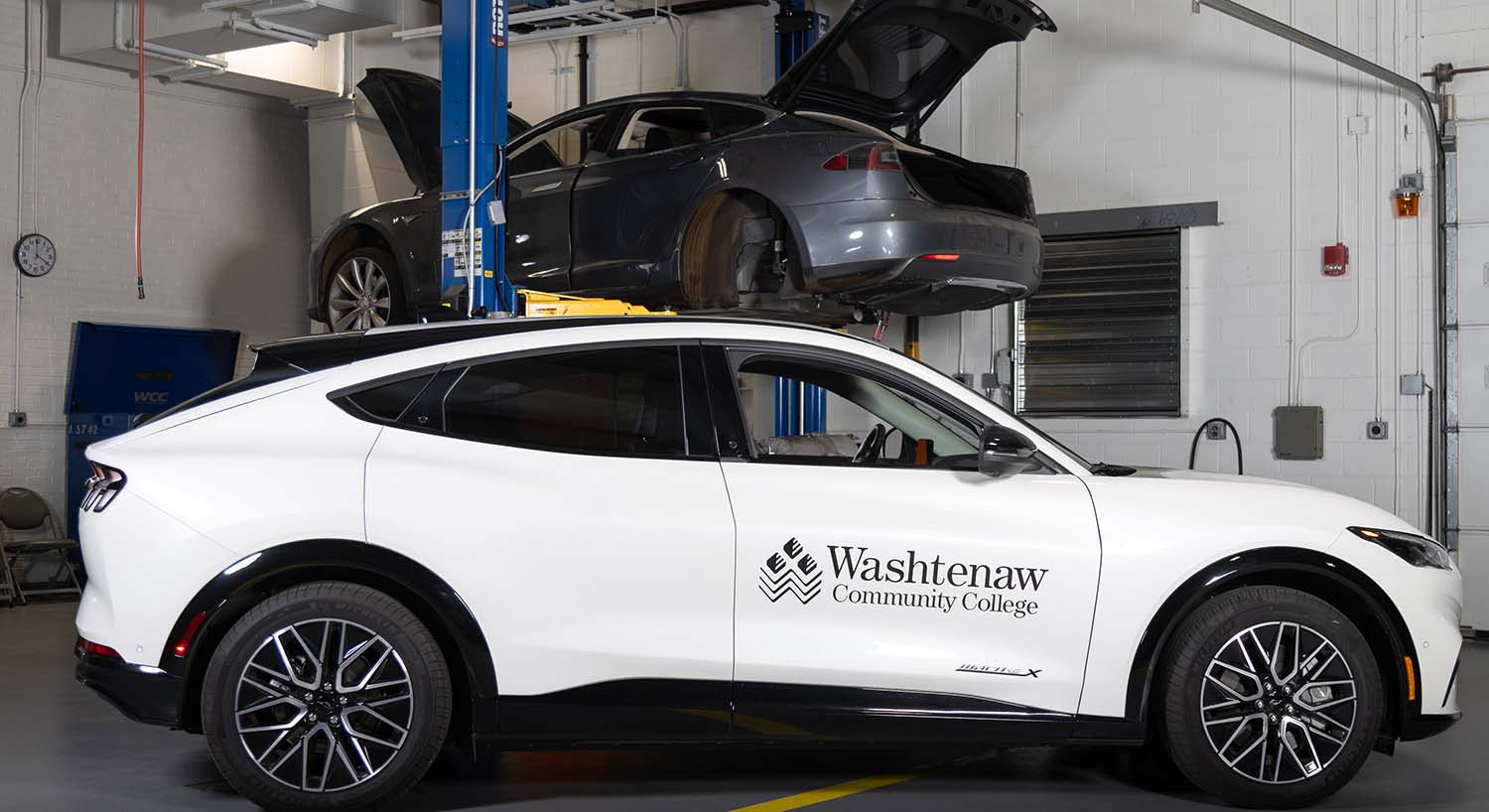
Get powered up for the future of transportation with essential electric vehicle skills.
In this program, students will be introduced to the rapidly growing electric vehicle
(EV) and hybrid vehicle (HEV) market. Students will learn the safety standards, precautions,
and best practices needed when working around EV's and HEV's. Topics of study will
include basic electrical system identification and testing along with ever evolving
new technologies incorporated in alternative energy vehicles such as EV's and HEV's.
This mini-certificate will prepare students for High Voltage (HV) specific ASE testing
required for the industry.
Next Steps
Apply See Program & Courses in Catalog Request Information
Career Outlook in Michigan
| Career Title |
Median Salary |
Annual Openings |
| Electronic Equipment Installers and Repairers, Motor Vehicles |
$48,069 |
12 |
| Security and Fire Alarm Systems Installers |
$55,106 |
239 |
| Electrical and Electronics Repairers, Commercial and Industrial Equipment |
$66,144 |
139 |
Data provided by Lightcast
What do Electronic Equipment Installers and Repairers, Motor Vehicles do?
-
Install equipment and accessories, such as stereos, navigation equipment, communication equipment, and security systems.
-
Inspect and test electrical or electronic systems to locate and diagnose malfunctions, using visual inspections and testing instruments, such as oscilloscopes and voltmeters.
-
Cut openings and drill holes for fixtures and equipment, using electric drills and routers.
What skills do Electronic Equipment Installers and Repairers, Motor Vehicles have?
-
Repairing:
Repairing machines or systems using the needed tools.
-
Troubleshooting:
Determining causes of operating errors and deciding what to do about it.
-
Critical Thinking:
Using logic and reasoning to identify the strengths and weaknesses of alternative solutions, conclusions, or approaches to problems.